GlitterBug Gel: A Primer

Having clean hands is always important, but using soap and water isn’t always practical. In hospital and other patient care situations, as health care workers move from one patient to another, a soap-and-water washing doesn’t always contribute to overall time-effectiveness.


Hand sanitizer (also referred to as alcohol-based handrub) is a well-researched, efficacious product which is considered to fulfill the highest standards of safety in regards to infection prevention. Its creation and widespread availability has revolutionized modern hand hygiene practices.


If you use hand sanitizer, GlitterBug Gel is a great product for you. It teaches and evaluates the effectiveness of how hand sanitizer is applied. It looks and feels like sanitizer, and though it’s 60% alcohol, it doesn’t kill germs. Simply apply as you would regular hand sanitizer, and check under the light. Any glowing areas on your hands indicate a thorough application of sanitizer.


Watch this quick video to see how it’s done:

Use GlitterBug Gel to help you see how well your hand sanitizer is working.


Source: http://www.who.int/gpsc/tools/faqs/system_change/en/

Glitterbug Gel or Potion? That is the question . . .

Good handwashing technique is paramount to infection prevention. Most adults would likely say they know how to wash their hands; after all, it’s something they’ve been doing since childhood. Many might be surprised, however, to find out how much residue can be left on their skin after a routine washing. And though it can feel awkward to think about having to learn how to wash your hands—especially as an adult—doing so can make a world of difference in preventing the spread of germs.

Handwashing
GlitterBug Gel and GlitterBug Potion are excellent products to aid in teaching proper hand hygiene to kids and adults alike. Both are intended to show how effective your current hand-cleaning methods are, and in turn, both products teach better techniques for hand-washing.


If both products do the same thing, what are the differences between the two? And which do you need?


A main difference can be found in the name of the products. GlitterBug Gel is just that: a gel. It is not a sanitizer and won’t kill germs, but it feels like a sanitizer. GlitterBug Potion is a hand lotion with a special UV fluorescent powder mixed in to show which part of your hands need a little more cleaning.


Which product you need depends on how you’re cleaning your hands. If you mainly use hand sanitizer, you should use GlitterBug Gel. If you usually wash with soap and water, GlitterBug Potion is for you.
Whichever way you wash your hands, a refresher on how you’re doing is a great way to learn how to be better in preventing the spread of germs.

4 Tips for a Safe Summer Picnic

picnic-1208229_1920


With summer in full swing you’ve probably attended a picnic or two. Don’t let the great outdoors leave you vulnerable to germs and infection. Here are 4 tips to have a healthy summer picnic:


Keep cold food cold. Use gel packs or ice in your cooler to keep cold food at or below 40 ℉ and prevent the growth of bacteria.


Keep hot food hot. When grilling, cook your food thoroughly and keep it hot until serving. You may want to bring your food thermometer: the safe temperature for ground beef is 160 ℉, and for chicken it’s 165 ℉.


Make sure all food prep and eating surfaces are clean. Use disinfecting wipes to clean tables and chairs. Keep plates and utensils clean, and avoid cross-contamination while preparing food.


Have everyone wash their hands! Before preparing and eating food (and after touching most anything outdoors) simple soap and clean water from a jug will do for an outdoor handwashing. Moist towelettes are also a good option.


Hand-washing remains the most effective prevention against the spread of germs in home and community settings. For extra confidence in your family’s hand-washing abilities, use GlitterBug Gel or Potion, and help everyone enjoy the rest of a safe, healthy summer.


Source: http://www.fda.gov/Food/ResourcesForYou/Consumers/ucm109899.htm

Infection Prevention and Your Cat?


cat_rat

We all know one of the most effective ways to stop the spreading of infections is proper hand hygiene. In certain scenarios, however, particularly in big cities, deterring the spread of germs and disease requires other creative solutions.


It’s well known that rats are detrimental to public health. They carry E.coli and C.diff, antibiotic-resistant diseases transmitted to humans through direct contact, such as a rat’s bite. But you don’t have to have up-close interaction with a rat to be vulnerable to their dangers: disease is spread through their urine, feces, and fur (and rats shed a lot).


Cities like Chicago and Vancouver have endured such a massive infestation, rodent task forces have been put in place, with accompanying public awareness campaigns. Residents and business owners have tried to eliminate rats by using methods like traps, poison, and trenches, sometimes spending thousands of dollars on pest control attempts, all to no avail.


The most effective tool they’ve been able to find? Cats. That’s right, they’re not just good for internet videos: cats happen to be effective weapons in public health.


An animal shelter in Chicago called Tree House has contributed greatly to improving public health with their innovative idea of taking rescued cats who aren’t good candidates for adoption, and putting them to work. The Cats at Work project places colonies of cats where they’re needed most. The result is rat-free yards and buildings. With cats on the scene, rats– and diseases they carry– have been eradicated from residences and businesses alike.


As always keep washing your hands, but if you need more help, don’t be afraid to employ your cat.


Sources: http://edition.cnn.com/2016/07/15/health/cats-chicago-rat-patrol/index.html, http://www.cdc.gov/features/handwashing/

Image: https://pixabay.com/en/cat-animal-cat-portrait-cat-s-eyes-1508613/

Germs can be found in the strangest places (so wash your hands)!

Germs  hide in the strangest places.

So make sure you always wash your hands well, and use Brevis products to ensure your hands are clean!

“The bulk of germs are hiding where you least suspect—playground equipment, the phone receiver, ATMS and elevator buttons.” – Charles Gerba, professor of environmental microbiology at the University of Arizona


(Post and credit for facts: health.state.mn.us/handhygiene)

Jimmy Kimmel and Guillermo: Learning the Correct Way to Wash Hands

Learning to wash your hands the right way is no laughing matter. Jimmy Kimmel wanted to make sure he was doing it right, so he reached out to Dr. Poland from the Mayo Clinic in Minnesota, who is a specialist in infectious disease.

Check the video out below, and then CLICK HERE to look at all the GLITTERBUG kits that can help ensure you are washing your hands correctly too!

Transient Germs Facts

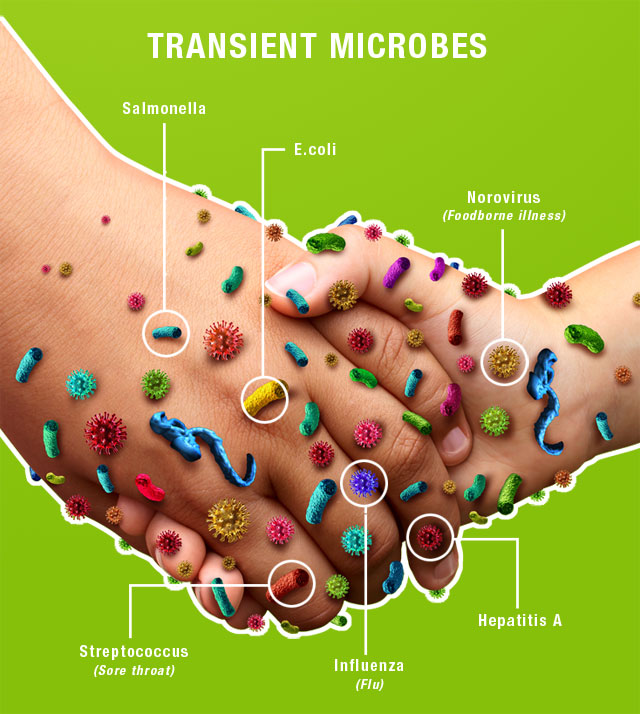
TRANSIENT MICROBES

Skin is our first line of defense against invasions that can cause illness, but skin – especially the skin ON our hands – can also transport countless microorganisms.

Our hands are incredibly versatile. We use them to push, pull, grab, and hold things. Because of this they are constantly picking up and depositing transient microbes. Our hands then become carriers of a diversity of microbes, some of which can cause us harm. We grant many of them access into our bodies when we touch the food we eat, our eyes, noses and mouths. Transient germs live primarily on the surface of the skin and can easily be transferred. The good news is that you can remove them with proper handwashing or render them harmless with hand sanitizer. Washing your hands frequently is the best way to prevent spreading them. Below are a few of the more common culprits

Brevis-factograph_short-for-blog-(0416)

Antibiotics in the foods we eat: Why the drugs are losing their power

The Centers for Disease Control (CDC) and the World Health Organization (WHO) have called for an end to the nontherapeutic use of drugs in animals that are used to treat human disease. Why? The short answer is giving healthy livestock these drugs breeds superbugs that can infect people.

Here’s a great explanation from the Union of Concerned Scientists: “Bacteria become resistant to antibiotics through overexposure to them. Hardy strains of the bacteria survive the exposure and pass on that resistance trait to successive generations. And they also pass the trait across to other bacteria that are unrelated, including some that cause human disease. Eventually the antibiotic wipes out all the vulnerable bacteria, and only resistant bacteria remain. Then the drug is no longer effective.”

The U.S. Food and Drug Administration (FDA) started testing retail meat and poultry for antibiotic-resistant bacteria in 1996. It was not until 2008, however, that Congress required companies to report the quantity of antibiotics they sold for use in agriculture to the FDA. Why is that so important? According to a report from the New York Times, “In 2011, drugmakers sold nearly 30 million pounds of antibiotics for livestock — the largest amount yet recorded and about 80 percent of all reported antibiotic sales that year. The rest was for human health care.”

That’s right, 80 percent of antibiotics are being used for livestock! That means the meat and poultry we humans eat give resistant bacteria a direct route to us — right through the grocery store and into our kitchens. But combating resistance requires monitoring both the prevalence of antibiotic-resistant bacteria in our food, as well as the use of antibiotics on livestock.

In March of this year, McDonald’s announced a plan to require chicken suppliers to stop using antibiotics important to human medicine within two years. Chicken supplier Tyson Inc. reported they’ll also stop giving chickens the same antibiotics used by humans; Tyson noted it has reduced the use of antibiotics effective in humans by more than 84 percent since 2011. The National Chicken Council also released a statement that says chicken producers have been working to phase out the use of antibiotics important in human medicine to promote growth in animals.

Restaurant chains Chipotle and Panera already say they serve chicken raised without antibiotics, but the announcement by McDonald’s is notable because of its size. McDonald’s has more than than 35,000 locations on Earth, and the U.S. has the highest concentration of them — about one for every 20,000 residents according to The Guardian’s Datablog. Compare that to Chipotle’s nearly 1,800 U.S. locations and Panera’s almost 1,900 U.S. locations.

There is more than enough scientific evidence to justify curbing the rampant use of antibiotics for livestock, yet the food and drug industries are fighting proposed legislation to reduce these practices. What do you think about antibiotic use in agriculture and livestock? Should they all move to using drugs that are not considered medically important for humans? Share your insights now in the comments section.


 

The filthy dirty truth about handwashing and hygiene in public restrooms

hygiene habits in public restrooms

We’ve all been there: You have to “go” and you’re nowhere near home so you have a choice: shame yourself or (gasp!) use a public restroom. So you consult a phone app to find the closest clean restroom (yes, there are several apps) and enroute to your designated clean loo you strategize how to get your business done and come out unscathed. How do you get IN or OUT of the restroom without touching the door handle, for instance? Do you use your elbow? Do you grab a tissue or moist wipe from the pack you always keep handy? Same goes for the stall door. And what if the seat is in the wrong position? You can always employ the squat-and-hover method and flush the toilet with your foot.

Discussing the variations is like watching a skit on Saturday Night Live. Let’s say you flushed the toilet with your foot. Well, that means the next person might use their hands and whatever was on your shoe is now on their hands. And vice versa. You used a paper towel to open the door, but there’s no garbage to dispose of the now dirty towel…so where do you put it? And let’s say you placed your handbag or backpack on the hook on the stall door, but what was on the hook before you got there? Because you may be taking it with you. It’s a vicious cycle. Is there a solution?

After one of the largest handwashing surveys in the UK revealed some “deplorable habits” recently, a company there launched a product to promote hand hygiene and shame bad hygiene by displaying rates on screens in bathrooms. The product was piloted across different types of businesses such as education, office and retail facilities as well as other sectors where good hand hygiene is essential—and the company claims the “informal nudge” and increased peer pressure helped drive good behavior rates up dramatically. “Hand washing rates rose to 90 per cent within two days of the data being displayed, before stabilising between 80 per cent and 85 per cent.”

Of course, we never tire of handwashing discussions around here. Now, another new survey from restroom fixture manufacturer Bradley Corporation has gone and given us more fodder by covering the actions many of us take to avoid touching anything in a restroom. Sounds oddly familiar and we’re not alone: 57% of people using public restrooms operate the flusher with their foot; 55% use paper towels with the door handle; 45% open and close the door with behind (we assume that’s a hip or bum); and 69% of people use their elbows to avoid all contact in a public restroom.

We look forward to a world where 100% of respondents are washing their hands, but in the meantime we’ll take an increase in people using paper towels, elbows, feet and bums, too.  Of course, there’s always room for improvement when it comes to the state of public restrooms. In fact, an unpleasant restroom experience can create a damaging and lasting impression for a business—and that’s bad for business. According to the Bradley survey, the majority of consumers believe an unclean restroom indicates poor management (69%), lowers their opinion of the company (67% ) and signifies that the business doesn’t care about customers (63%).

Which brings us to another improvement we’re thrilled to see in the business of taking care of our business: clean public restroom apps. There are several out there and we’re not making a recommendation, but it can’t be worse than going to a public restroom without some kind of head’s up.

  • Sit or Squat is brought to you by none other than Charmin, the makers of toilet paper and it has one purpose: to identify bathrooms around you and let you know if they’re nice and clean . . . or not so nice. This app is crowd-sourced, but it receives mixed feedback from users.
  • Toilet Finder uses the slogan “May the flush be with you” and claims its database to includes more than 70,000 public-accessible restrooms.
  • Whizzer claims to be the ultimate bathroom locator and lets you search by current location to find clean restrooms, those that are open late at night, and those with showers. You can also search to include baby changing stations, feminine hygiene products, and can even specify just how clean you want the restroom to be. You can even follow them on Twitter!
  • Diaroogle.com calls themselves “the premier toilet search engine” and when the time comes for us to go, we really hope they’re right.
  • Bathroom Scout offers turn-by-turn navigation can lead you directly to blessed relief. If imagery is available on street view, “Bathroom Scout” can also show you the location around the bathroom, providing added peace of mind.
  • Where to Wee is an app that helps you find and rate restrooms worldwide. “Whether it’s a road-trip that never seems to end, or an endless line in front of the women’s restroom: when you gotta go, you gotta know.

Guess who’s coming to dinner? Salmonella and other food-borne illnesses if Senator Tillis has anything to say about it.

Handwashing is required by restaurant workers

Is requiring food workers to wash their hands after using the bathroom an onerous government intrusion? Senator Thom Tillis of North Carollina thinks so.

During a recent appearance at the Bipartisan Policy Center, Senator Tillis stated that businesses are bogged down by government regulations, so he thinks restaurants should be able to opt-out of the requirement that employees wash their hands after using the restroom—as long as they let customers know.

Tillis told the story of a time a woman asked him if hand washing wasn’t the sort of regulation that needed to be on the books. With his right hand raised for emphasis, Tillis concluded that in his example most businesses who posted signs telling customers their food workers didn’t have to wash their hands would likely go out of business. Tillis’s example takes pressure off businesses to provide safe food, and forces consumers to judge every meal’s likelihood of making them violently ill. Ah, the free market!

In case you didn’t know, the FDA requires handwashing and here’s why: “Proper handwashing reduces the spread of fecal-oral pathogens from the hands of a food employee to foods.” Gross! Recently, a restaurant in Mercer County, New Jersey was cited for handwashing violations—just a month before a worker tested positive for hepatitis A. The Centers for Disease Control and Prevention says hepatitis A is spread when an infected person doesn’t wash his or her hands after going to the bathroom and touches other objects or food.

In 2013, an All American Grill in Tillis’s home state gave a hundred people salmonella. The health department identified several health violations that could have contributed to food cross-contamination, including the fact that the hand washing sink was out of paper towels and soap, and didn’t have sufficiently hot water, all factors that “could serve as a deterrent to hand washing or render it ineffective,” according to the department. In that situation that market didn’t take care of the safety risks—100 ill guests and employees did.

Tillis was the butt of a lot of jokes after his comments went public. Jon Stewart even did this segment “Mr. Unclean,” on The Daily Show. Says Stewart, “You do realize that that’s a regulation too, right? … That’s not getting rid of a regulation, that just makes you an inconsistent ideologue with a light fecal dusting in your latte.”

Telling people to wash their hands never gets old around here. If workers are serving food and not washing their hands, they’re also serving up germs and sickness. So if free-market ideology means we can’t go out to eat without worrying about getting sick we’ll just stay home for dinner.

Infection Prevention & Hand Hygiene Resources