Swine Flu at State Fairs


State Fair season may have come to a close for this year, but some news from Michigan and Ohio tells us about something we should know about when we attend these events: swine flu.

Brevis Swine Flu

Most of us became familiar with swine flu, or influenza A (H3N2), because of news coverage of outbreaks in 2012. It is called a variant virus, which is when a flu virus normally found in pigs is found in a person.

The US Centers for Disease Control and Prevention (CDC) confirmed variant swine flu viruses in 18 people in August of this year. All who were infected had attended agricultural fairs; 16 of the 18 were children, seven under five years old. Four individuals said they’d passed through a swine barn, and 13 said they’d directly touched or handled a pig. One individual was hospitalized, and all recovered fully.

So what should we know before we go to fairs or zoos? Dr. Greg Poland, director of the Mayo Clinic’s vaccine research group and member of the Infectious Diseases Society of America, says, “Recognize that these animals carry influenza viruses — they’re the source of them — and so appropriate and hygiene is important. Kids need to have their hands washed well.” Particularly after petting an animal, children should not eat until they wash their hands or use sanitizer. Teach kids not to put their hands on their face or in their mouth while at the fair. If your child get sick after the fair or zoo, and does not get better, seek medical attention. Children who are 6 months and older should get annual flu shots, as recommended by the CDC, which helps stop variant viruses from spreading wildly, and also helps decrease the number of new viruses.

Sources:

http://edition.cnn.com/2016/10/27/health/swine-flu-fairs/index.html

https://static.pexels.com/photos/63285/pig-alp-rona-furna-sow-63285.jpeg

 

3 essentials for effective handwashing

Water.

Soap.

20 seconds.

That’s it.

Wash your hands — often. It’s single most important thing you can do to keep from getting sick. Scrubbing hands and wrists well is a must too, and then a good rinse. That’s all it takes.

Did you know people commonly catch colds when they rub their nose or their eyes after their hands have been contaminated with the cold virus? If you picked up germs from other people or from contaminated surfaces, you’ll get rid of them if you wash your hands well.

So parents–what can you do? Encourage children and others by setting a good example. Wash your hands properly in front of children to teach them that hand washing with soap and water is more than a chore — it’s an important way to prevent colds, sore throats and infections.


Sing a Song About Hand-Washing


Songs get stuck in our heads and we remember all sorts of things, from useless lyrics, to rules of grammar (Schoolhouse Rock, Anyone?). We use a song to teach the alphabet to children, so why not use songs to teach other important information?

Nigerian pop singer Sunny Neji decided to use his influence to help teach people the importance of hand hygiene. “People love music, so if I could construct a lovely melody and put in some memorable words, it could stick in people’s minds faster.”

The result? An upbeat song called, “Wash Your Hands O!”

[embed: ]

Lyrics like, “Prevention is cheaper than cure,” or, “Dirty hands, they carry disease,” will likely make kids and adults smile or even laugh, but you have to admit: the message is clear, and the tune is catchy.

Read more about this song here.

**Reminder: LAST DAYS OF THE BREVIS SALE!
From now through October 31, 2016, use the code “Fall16” to get a 10% discount on orders over $25.00

Sources:

http://www.npr.org/sections/goatsandsoda/2016/10/14/497701330/some-singers-sing-about-love-he-sings-about-hand-washing


Happy Hands for Students

Educators know that keeping hands clean is one of the best things kids can do to prevent illness and the spreading of germs to others. Brevis products like GlitterBug Gel and GlitterBug Potion provide fun ways for kids to learn the effectiveness of handwashing techniques.

hh-logo-correct

Right now there’s another way to get kids excited about hand hygiene. Deb’s Happy Hands Contest educates students about the importance of handwashing while giving them a chance to show their artistic creativity by submitting original designs to be featured on soap dispensers.

Educators can register their school on the website, and submit their students’ designs by December 5. Top finalists in three categories (elementary, middle, and high school) will be announced January 16, and public voting will be open for one month. Winners will be announced March 1, 2017.

Each winning design receives three prizes: a $500 donation to the winning student’s school, a $200 gift card for the student, and up to 500 soap dispensers to display the winning design in the school.

Getting kids involved in hand hygiene awareness in creative, memorable ways– whether through a dispenser design contest, or a GlitterBug demonstration— is a win for everyone.


**SPECIAL NOTE:

Brevis is offering a promo-code discount for Fall 2016 that will start Sept. 20 and go through October 31, 2016.

The promo code is “Fall16” which will apply a 10% discount to orders over $25.00.


Sources:

http://info.debgroup.com/happyhands

http://www.cdc.gov/handwashing/

http://www.debgroup.com/us

http://www.brevis.com/blog/2016/08/glitterbug-gel-a-primer/

http://www.brevis.com/blog/2016/09/glitterbug-potion/

http://www.brevis.com/blog/2016/08/back-to-school-with-glitterbug/


5 Ways to Help Prevent the Flu

Flu season is upon us! The flu (or influenza) causes more hospitalizations among young children than any other vaccine-preventable disease. Beyond getting seasonal flu vaccines, what else can be done to protect against getting the flu?

FLU

Here are 5 actions to take every day:

Stay home when you are sick. Nobody likes to fall behind in their day-to-day tasks, so it can be tempting to go to work or school, or even run errands when you’re sick. Staying home, however, will help others from catching your illness. (Plus, you need to rest so you can recover quickly!) Also, avoid close contact with others who are sick.


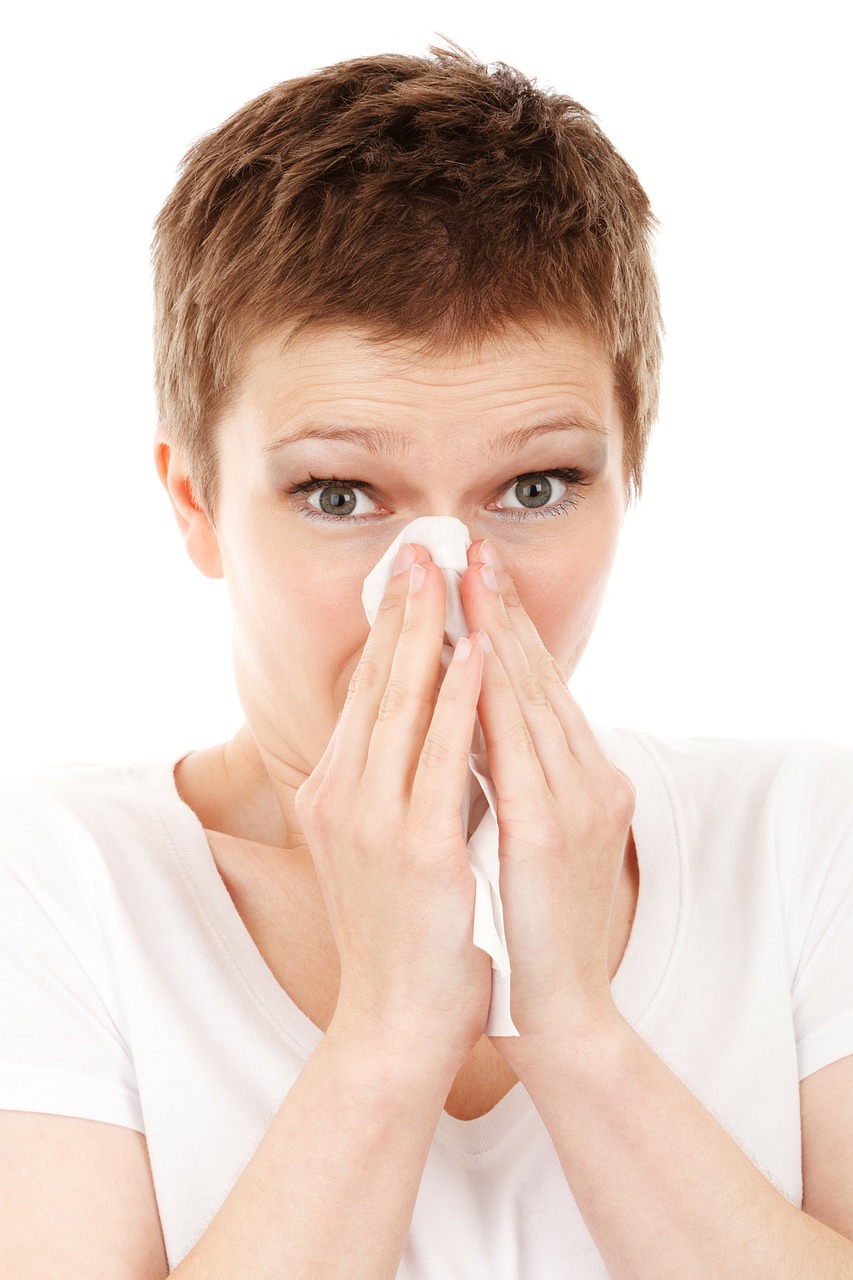
Cover your nose and mouth with a tissue when you cough or sneeze, throw the tissue away after you use it, then wash your hands. Teach children to cough or sneeze into their elbow (if a tissue isn’t available) rather than their hands to minimize spread of germs.


Avoid touching your eyes, nose, or mouth. It may take a concentrated effort to break these habits, but remember: germs spread this way.


Clean and disinfect surfaces and objects frequently touched at home, work, or school, especially when someone is sick.


Wash your hands often with soap and water, especially after coughing or sneezing. Alcohol-based hand rub is another option if soap and water aren’t available.


Children and adults alike can make healthy choices at school, work, and home to help prevent catching– and spreading– the flu.


Sources:

http://www.cdc.gov/flu/school/index.htm

http://www.cdc.gov/flu/pdf/freeresources/updated/everyday_preventive.pdf

https://pixabay.com/en/allergy-cold-disease-flu-girl-18656/
SPECIAL NOTE:
Brevis is offering a promo-code discount for Fall 2016 that will start Sept. 20 and go through October 31, 2016.
The promo code is “Fall16” which will apply a 10% discount to orders over $25.00.

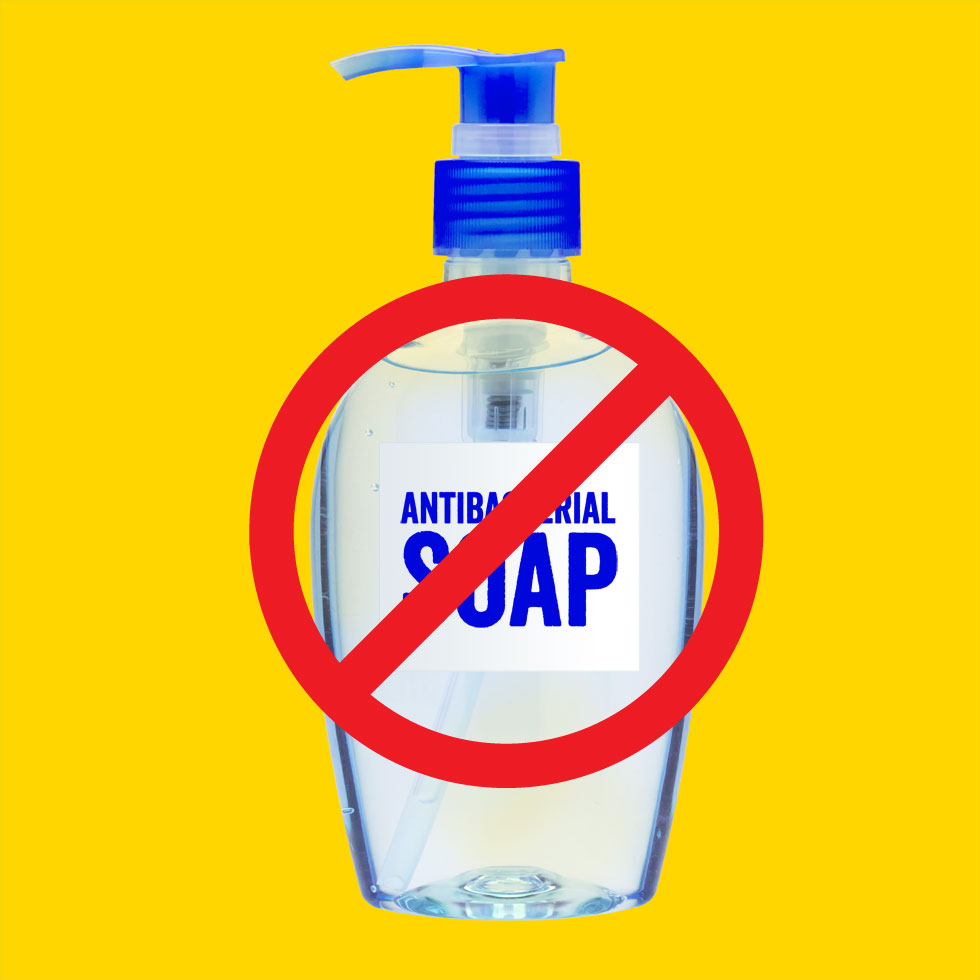
FDA Ban on Antibacterial Soap?


You may have heard recently that the Food and Drug Administration (FDA) issued a ban on certain ingredients found in antibacterial soaps and washes. What exactly does this mean?


antibacterial-soap-graphic_yeller

Dr. Janet Woodcock, director of the FDA’s Center for Drug Evaluation and Research explained, “Consumers may think antibacterial washes are more effective at preventing the spread of germs, but we have no scientific evidence that they are any better than plain soap and water.”


Essentially, by using products labeled as antibacterial, many consumers think they’re receiving health benefits that simply aren’t there. In fact, according to a paper published in 2007, regularly using antibacterial soaps may be linked, over time, to the growth of a dangerous drug-resistant bacteria. Researchers concluded, “Further studies of this issue are encouraged.”


One co-author of the paper noted, “…the public still has the option of using hand sanitizers, which work faster and better than the current consumer ‘antibacterial’ soaps….”


Back in 2013, the FDA proposed a rule requiring manufacturers of antibacterial hand soaps and body washes to prove their products were more effective than plain soap and water. No data establishing safety and effectiveness of these products was provided.


Companies affected have almost a year to either remove the ingredients from their products (triclosan and triclocarban are the most commonly used chemicals) or no longer market their products before the final rule goes into effect September 6, 2017.


In the meantime, you can rest easy knowing that your hand sanitizer and soap don’t need to be labeled as ‘antibacterial’ in order to be effective. Just make sure you’re still washing your hands!


Sources:

http://www.cnn.com/2016/09/02/health/fda-bans-antibacterial-soap/index.html

https://s3.amazonaws.com/public-inspection.federalregister.gov/2016-21337.pdf


SPECIAL NOTE:
Brevis is offering a promo-code discount for Fall 2016 that will start Sept. 20 and go through October 31, 2016.
The promo code is “Fall16” which will apply a 10% discount to orders over $25.00.

GlitterBug Potion

Not long ago we shared a primer on how to use GlitterBug Gel — a great product for measuring the effectiveness of how hand sanitizer is applied. But what about those of us who don’t use hand sanitizer? If you prefer to wash your hands using soap and water, GlitterBug Potion is for you!

gb.potion

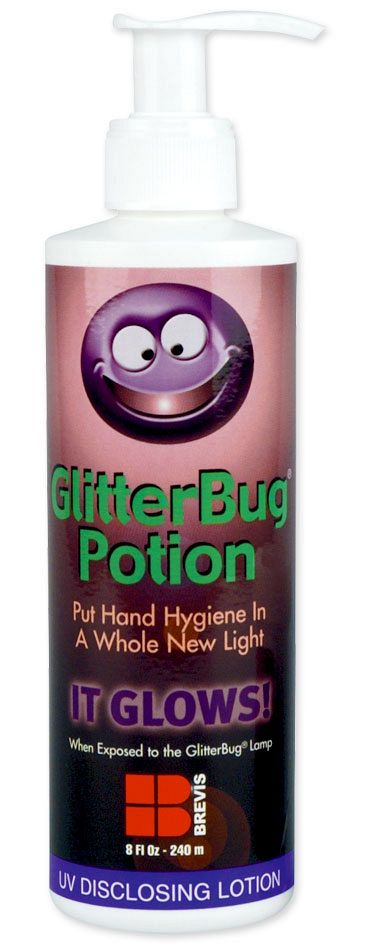
We usually think of potion as a substance used in mythology or magic; the stuff of fairy tales and imagination. GlitterBug Potion, however, is a real product used to teach good handwashing technique. The potion consists of a UV fluorescent powder mixed in a special hand lotion.


To see how GlitterBug Potion works, apply the Potion as you would any other lotion. Next, wash your hands as you normally would with soap and water. Dry your hands thoroughly, then check under the light (such as the GlitterBug Disclosure Center). Are any areas of your hands glowing? Those are the areas you need to wash more thoroughly.


Commonly missed areas include the knuckles, sides of the hands, and fingernail area. Consider using a GlitterBug Hand and Nail Scrub Brush to reach those tough spots.


For cleaner hands, a magic wand won’t help you, but GlitterBug Potion will!


Back to School with GlitterBug


With so many kids going back to school, it’s a great time to remind everyone of the importance of washing their hands.

Who better to teach a hand-washing lesson to kids than kids themselves? Let’s see what these kids have to say.

Share the video with kids you know. Help them understand the importance of washing their hands the right way – “The GlitterBug Way.”


What We Can Learn from Rio’s Contaminated Water Situation

The 2016 Olympics have come to a close and many are continuing a discussion which has been going on since before the games began: What’s the deal with Rio’s contaminated water?

olympia-1539043_1280

The world watched as athletes competed in water visibly tainted and unclear. However, It was clear that their methods of water sanitation and their push to clean the water permanently were unsuccessful.


The World Health Organization (WHO) advises the International Olympic Committee (IOC) and Local Organizing Committee (LOC) on health issues related to the games. Recommendations for this year’s games included water quality testing in recreational waters, particularly those used by athletes competing in sailing, rowing, canoeing, and swimming events. Most common of illnesses associated with polluted recreational water exposure is mild gastroenteritis. Others include respiratory infections, and skin and ear infections.  


And yet most athletes were able to stay healthy despite unsatisfactory water conditions. How did they do it? Andy Hunt, CEO of the governing body World Sailing, reported on precautions taken by sailors in Rio. “Everyone has been very careful in using hand hygiene, washing down clothing, boats, and so on.”


Avoiding exposure to contaminated water isn’t always possible, especially while traveling. The general well-being of the athletes throughout the games only validates what we already know: proper hand hygiene is key in preventing illness.


Sources:

http://www.who.int/water_sanitation_health/water-quality/recreational/rio-water-quality-qa-julyupdate.pdf?ua=1

http://www.who.int/water_sanitation_health/bathing/statement-rio-water-quality/en/

http://www.wkbw.com/sports/olympics/rio-2016/water-to-remain-filthy-in-rio-after-olympics

https://pixabay.com/en/olympia-summer-olympics-1539043

Olympians and Spectators: Wash Your Hands!

circles-1573621_1280

The world’s eyes have been focused on Rio since the Olympic Games opened on August 5. With Brazil having been in the news this year because of a massive Zika outbreak, it’s no surprise many have been concerned for the health of Olympic athletes and spectators alike. Health officials, however, aren’t concerned with a big risk for spread of the virus.

Why?

According to the World Health Organization (WHO), the U.S. Centers for Disease Control and Prevention (CDC), and the European Center for Disease Prevention and Control (ECDC), Zika is classified as ‘low risk’ among health concerns surrounding the Olympics. It’s winter in Brazil, so mosquitoes (whose bites are believed to be the primary method Zika spreads) aren’t as much of a concern as they would be in warmer months. Additionally, with authorities working to kill off and control mosquito populations, the number of new cases recorded has steadily declined for months.

Meanwhile, influenza is listed as being ‘high risk,’ as it’s flu season in Brazil. John McConnell, editor of Lancet Infectious Diseases, said, “People are much more likely to go home carrying flu than Zika virus, and flu is a much more dangerous disease.” With all the press coverage about Zika it’s important to remember that in the United States, Zika has killed one person, whereas the flu kills more than 30,000 people each year.

The best way to avoid the flu, aside from getting a flu vaccine, is to practice good health habits such as thorough and frequent hand washing. Proper hand hygiene remains one of the best ways to protect yourself and your family from getting sick.

Here’s to all the Olympic athletes and spectators who will soon be traveling to their homes from Rio! We hope you had a memorable time, and we hope you remember to wash your hands!

Sources:

http://www.vox.com/2016/7/20/12209168/2016-rio-olympics-zika-virus-health-risks
http://www.cdc.gov/flu/protect/habits.htm

Image source:

https://pixabay.com/en/circles-olympics-olympic-games-blue-1573621/

Infection Prevention & Hand Hygiene Resources